
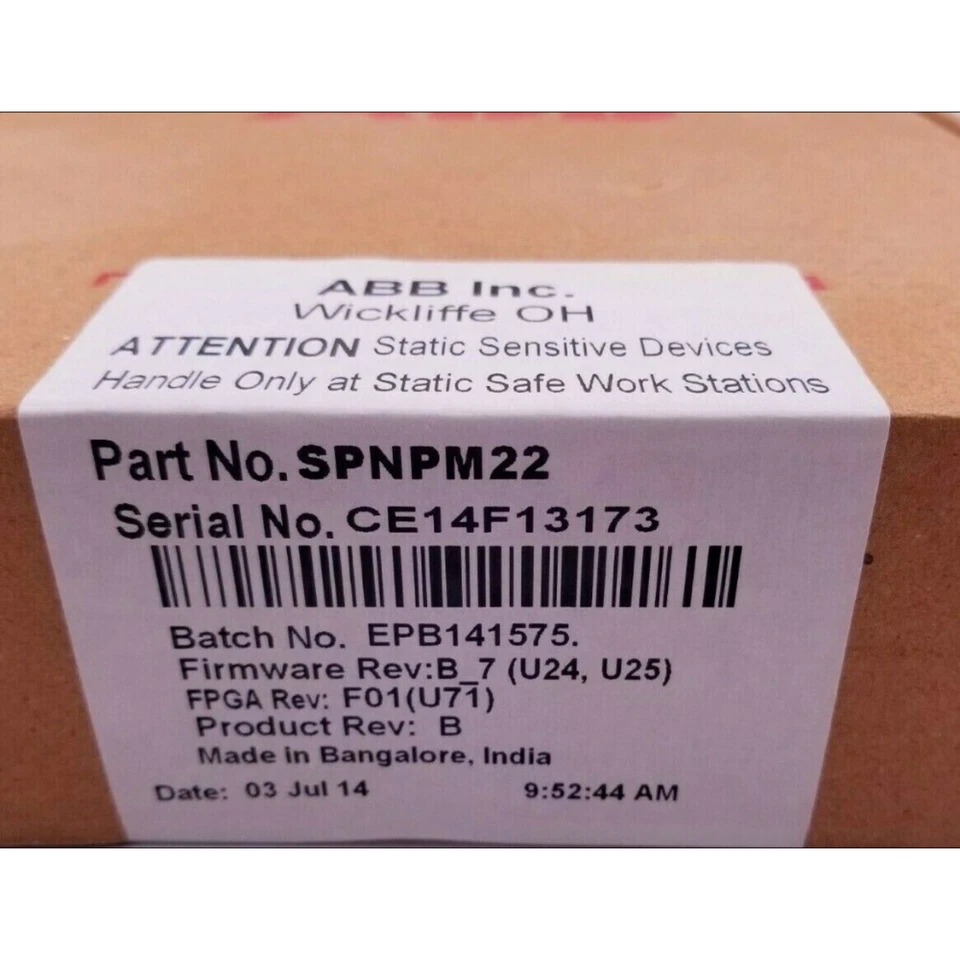
ABB SPNPM22 Module: Comparison Between Old and New Models
ABB SPNPM22 Module: Comparison Between Old and New Models
The ABB SPNPM22 module has long been a critical component in industrial automation systems, providing robust control, communication, and I/O management. Over the years, ABB has released updated versions of the SPNPM22, incorporating enhanced features, improved reliability, and advanced compatibility. Understanding the differences between old and new models is essential for engineers, system integrators, and maintenance teams to ensure seamless integration, reduce downtime, and optimize operational efficiency. This guide provides a detailed comparison, focusing on specifications, performance, maintenance, and practical implementation.
Overview of the SPNPM22 Module
The SPNPM22 module serves as a communication and I/O interface between controllers and industrial devices. It supports both digital and analog signals and offers high-speed data processing. The module’s modular design ensures flexible installation in industrial racks and easy replacement of faulty units. Key attributes include:
-
Compatibility with ABB PLCs and automation systems
-
Support for multiple input/output channels
-
Compact, durable construction for industrial environments
-
High-speed signal processing to minimize latency
By understanding the module’s baseline features, engineers can better evaluate improvements in newer versions.
Evolution of the SPNPM22: Key Upgrades
ABB continuously enhances its modules to meet industry demands. The new SPNPM22 model introduces several critical upgrades:
-
Enhanced Signal Processing: Improved data accuracy and reduced latency for faster response times.
-
Improved Reliability: Advanced thermal management and robust components minimize operational failures.
-
Expanded Compatibility: Supports a wider range of ABB PLCs and network protocols.
-
Simplified Maintenance: Easier access to connectors and modular design reduce maintenance time.
These upgrades address common issues faced with older models, including signal delay, module overheating, and integration complexity.
Technical Specifications: Old vs New SPNPM22
Comparing specifications highlights the key improvements in the latest SPNPM22 module.
| Feature | Old SPNPM22 | New SPNPM22 |
|---|---|---|
| Input Channels | 8 Digital, 4 Analog | 12 Digital, 6 Analog |
| Response Time | 15ms | 8ms |
| Operating Temperature | -10°C to 55°C | -20°C to 60°C |
| Power Consumption | 12W | 9W |
| Network Compatibility | Limited ABB PLCs | Expanded PLC and protocol support |
| Maintenance | Standard | Modular, easy-access connectors |
This table demonstrates tangible enhancements that improve reliability, speed, and overall system efficiency.
Installation Differences
Installing the new SPNPM22 is simplified compared to the older version. While both modules fit standard ABB racks, the new design emphasizes:
-
Tool-less Connector Access: Reduces installation time and minimizes errors.
-
Enhanced Slot Alignment: Prevents misalignment during insertion and ensures secure electrical contacts.
-
Integrated Indicators: LED indicators provide immediate status feedback for diagnostics.
Technicians familiar with the old SPNPM22 will notice improved ergonomics and faster deployment with the new model.
Maintenance Practices for SPNPM22
Maintaining both versions involves routine inspections, but the new SPNPM22 offers easier servicing. Recommended practices include:
-
Visual Inspection: Look for dust, corrosion, or loose connections.
-
Firmware Updates: Keep the module updated for optimal performance.
-
Environmental Checks: Monitor temperature, humidity, and airflow.
-
Cleaning: Use compressed air to remove dust and debris.
The modular design of the new SPNPM22 reduces downtime during maintenance and enables faster part replacements.
Common Issues and Troubleshooting
Even with updates, modules may encounter problems. Common issues include:
-
Communication Errors: Often caused by loose cables or outdated firmware.
-
Signal Loss or Delay: May result from damaged connectors or network interference.
-
Power Fluctuations: Can cause unexpected resets or errors.
-
Component Wear: Over time, connectors or circuitry may degrade.
Troubleshooting involves verifying power supply, checking connections, updating firmware, and functional testing of inputs/outputs.
Case Studies: Real-World Application
Companies upgrading from old to new SPNPM22 modules report:
-
Reduced Downtime: Faster installation and improved diagnostics shorten maintenance periods.
-
Enhanced Performance: New module reduces signal latency, improving process response times.
-
Cost Savings: Lower power consumption and fewer service interventions decrease operational costs.
-
Better Integration: Expanded compatibility allows smoother integration with other ABB devices.
These benefits demonstrate the value of adopting the updated SPNPM22 module in industrial setups.
Conclusion
The ABB SPNPM22 module is an integral part of industrial automation networks. Comparing old and new models reveals meaningful improvements in speed, reliability, maintenance, and compatibility. Engineers and technicians benefit from enhanced performance, reduced downtime, and simplified system integration. Understanding these differences ensures optimal deployment, system stability, and long-term operational efficiency. Investing in the latest SPNPM22 module aligns with modern industrial standards and helps future-proof automation systems.
