
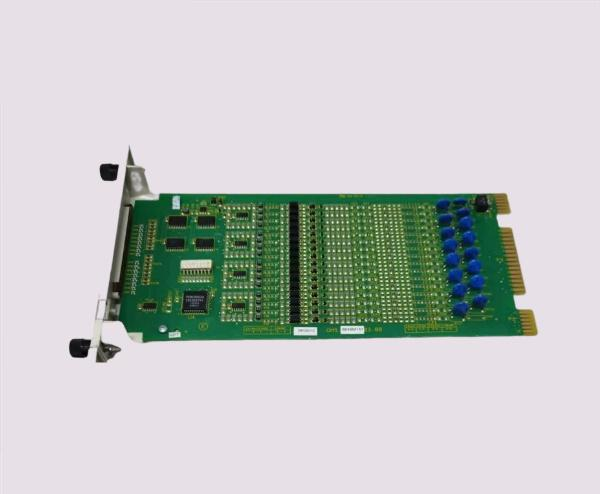
ABB SPDSI13 Module Applications in Power Systems
Introduction
The ABB SPDSI13 module plays a pivotal role in modern power systems, offering robust signal acquisition, precise logic processing, and seamless communication with PLC and DCS systems. Integrating this module into power generation, transmission, and distribution environments improves operational reliability and efficiency.
Wuhan Yuli Automation Technology Co., Ltd. (website: www.wuhanyuli.com) supplies original ABB SPDSI13 modules and provides technical support to ensure consistent performance in demanding electrical infrastructure.
This article examines SPDSI13 applications in power systems, explores integration strategies, and outlines the advantages of using this module in various energy sectors.
Overview of ABB SPDSI13 Module
Understanding SPDSI13 features is essential before exploring its power system applications. Key functionalities include:
-
Multi-channel digital and analog I/O support
-
High-speed logic processing for real-time control
-
Support for industrial communication protocols
-
Safety monitoring and diagnostics capabilities
These features allow SPDSI13 to handle complex power system tasks, such as real-time monitoring, protective relay control, and load management.
Applications in Power Generation
Generator Control and Monitoring
SPDSI13 modules integrate with PLCs to monitor generator parameters, including voltage, current, and frequency. By processing real-time signals, the module enables:
-
Automatic adjustments of generator output
-
Efficient load balancing
-
Early detection of abnormalities, preventing equipment damage
This application ensures uninterrupted electricity production and enhances generator reliability.
Turbine Automation
In thermal, hydroelectric, and gas turbines, SPDSI13 modules provide precise control over turbine speed, excitation systems, and safety devices. Real-time feedback allows operators to maintain optimal efficiency while reducing mechanical stress and downtime.
Applications in Power Transmission
Substation Automation
SPDSI13 modules support automation in substations by interfacing with circuit breakers, transformers, and protective relays. Functions include:
-
Continuous monitoring of voltage and current
-
Fault detection and isolation
-
Remote control of switchgear and breaker operations
Integrating SPDSI13 ensures rapid response to system disturbances, enhancing grid stability.
Load Management
Modules monitor real-time energy consumption across feeders and lines. By analyzing the data, operators can redistribute loads, reduce peak demand, and prevent overloading, improving transmission efficiency.
Applications in Power Distribution
Smart Grid Integration
SPDSI13 modules facilitate smart grid applications by connecting distributed energy resources, sensors, and controllers. This integration provides:
-
Accurate metering and data collection
-
Automation of demand response strategies
-
Enhanced coordination between renewable sources and conventional power plants
Distribution Automation
In local distribution networks, SPDSI13 modules enable remote monitoring and control of switches, capacitor banks, and voltage regulators. Operators can maintain power quality and reliability while minimizing human intervention.
Advantages of Using SPDSI13 in Power Systems
-
Enhanced Reliability
SPDSI13 modules maintain stable operation under demanding electrical conditions, reducing outages. -
Real-Time Monitoring
High-speed processing ensures immediate response to fluctuations or faults. -
Safety Improvement
Modules detect abnormal parameters and initiate protective measures, protecting personnel and equipment. -
Cost Efficiency
Reliable automation reduces maintenance frequency, minimizes downtime, and optimizes energy utilization. -
System Scalability
SPDSI13 supports expansion of control networks and integration with new devices without redesigning existing infrastructure.
Integration Guidelines
Compatibility Assessment
Before deployment, assess SPDSI13 compatibility with existing PLCs, DCS systems, and communication networks. Confirm voltage levels, protocol support, and slot availability.
Installation Best Practices
-
Install modules in climate-controlled, ABB-approved cabinets
-
Secure connections to prevent mechanical or electrical failure
-
Follow wiring diagrams and labeling standards
Testing and Commissioning
-
Simulate load conditions to verify module responses
-
Validate communication with supervisory control systems
-
Record baseline performance for future diagnostics
Maintenance and Troubleshooting
Regular maintenance maximizes module lifespan:
-
Inspect wiring and connectors periodically
-
Monitor signal quality and communication integrity
-
Update firmware to maintain compatibility
-
Replace modules showing persistent faults with original ABB units
Professional support from Wuhan Yuli Automation Technology Co., Ltd. (www.wuhanyuli.com) ensures quick fault resolution and uninterrupted system operation.
Case Studies
-
Hydroelectric Plant
SPDSI13 modules enabled automated turbine control, reducing manual intervention and improving energy output stability. -
High-Voltage Substation
Integration with protective relays allowed rapid fault isolation, maintaining grid stability and preventing cascading failures. -
Urban Distribution Network
SPDSI13 modules supported load balancing and smart grid communication, optimizing energy distribution and improving power quality.
Conclusion
ABB SPDSI13 modules provide a reliable, high-performance solution for power system automation. Their integration into generation, transmission, and distribution networks improves efficiency, enhances safety, and reduces operational costs. By leveraging SPDSI13 modules and working with professional suppliers such as Wuhan Yuli Automation Technology Co., Ltd. (www.wuhanyuli.com), power operators can ensure stable, scalable, and efficient electricity delivery.
