
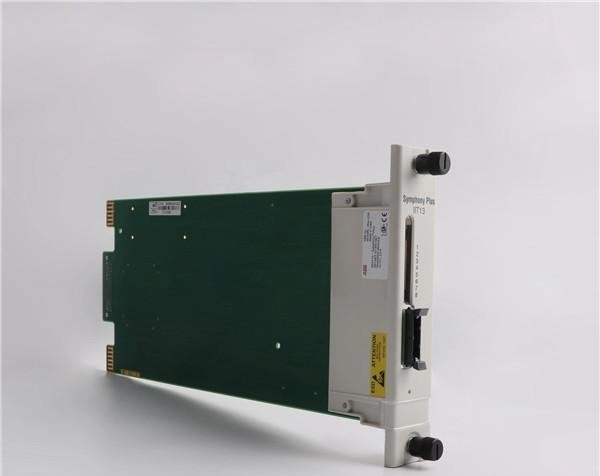
ABB Communication Card SPIIT13 | Yuli Automation
ABB SPIIT13 Communication Module Technical Insights
Introduction to ABB SPIIT13
The ABB SPIIT13 communication module serves as a cornerstone for industrial automation systems. It provides reliable, high-speed communication between controllers, field devices, and networked components. By integrating ABB SPIIT13 into automation frameworks, engineers ensure accurate data transmission, efficient system performance, and optimized industrial processes. This blog examines ABB SPIIT13 in detail, covering specifications, installation procedures, configuration tips, troubleshooting techniques, and practical applications.
ABB SPIIT13 Key Features
ABB SPIIT13 comes with several advanced features designed to enhance industrial automation:
- High-Speed Data Transfer: ABB SPIIT13 facilitates rapid communication between PLCs and field devices, reducing latency.
- Robust Connectivity: Designed for harsh environments, ABB SPIIT13 maintains reliable connections under electrical noise, vibrations, and temperature variations.
- Protocol Flexibility: ABB SPIIT13 supports multiple industrial communication protocols, making it versatile for various systems.
- Real-Time Diagnostics: ABB SPIIT13 continuously monitors communication integrity and provides immediate alerts when issues arise.
- Compact Design: ABB SPIIT13 fits standard control cabinets without requiring additional space, simplifying integration.
Using ABB SPIIT13 ensures seamless connectivity, consistent operation, and improved reliability in automation networks.
Technical Specifications of ABB SPIIT13
ABB SPIIT13 offers detailed technical specifications to support precise industrial operations:
- Communication Interfaces: Supports standard industrial interfaces for PLCs, HMIs, and controllers.
- Voltage and Power Requirements: Operates within typical industrial supply voltage ranges with energy-efficient consumption.
- Operating Temperature Range: ABB SPIIT13 withstands extreme industrial conditions, ensuring continuous operation.
- Signal Integrity: Built-in filtering and error-checking mechanisms maintain accurate and stable communication.
- Data Rate: ABB SPIIT13 ensures minimal latency for critical automation tasks.
These specifications make ABB SPIIT13 a reliable solution for critical industrial applications that require precision, speed, and durability.
Installation Guidelines for ABB SPIIT13
Pre-Installation Preparation
Before installing ABB SPIIT13, shut down the control system to ensure safety. Gather required tools, cables, and mounting accessories. Inspect ABB SPIIT13 for physical damage, verify model numbers, and review the installation manual to avoid errors during setup.
Mounting Procedure
Secure ABB SPIIT13 in the designated slot of the control cabinet or automation rack. Align it properly with the backplane connector. Ensure mounting screws are tight but not over-torqued. Correct mounting guarantees stable connectivity and prevents vibration-induced failures.
Electrical Connections
Connect ABB SPIIT13 to the system using shielded cables. Confirm polarity and verify signal integrity. Firmly seat all connectors. Proper wiring prevents communication errors and ensures optimal data transfer.
Configuration and Setup of ABB SPIIT13
ABB SPIIT13 configuration involves setting network addresses, communication protocols, and diagnostic parameters:
- Network Addressing: Assign unique identifiers to avoid conflicts.
- Protocol Selection: Match ABB SPIIT13 with the automation system protocols.
- Data Rate and Sampling: Adjust rates for specific application needs.
- Diagnostic Settings: Enable monitoring alerts to detect errors in real-time.
Correct configuration allows ABB SPIIT13 to operate efficiently, minimizing errors and enhancing automation system performance.
Operational Benefits of ABB SPIIT13
ABB SPIIT13 provides significant operational advantages:
- Reduces latency in critical control tasks
- Enhances overall system reliability
- Enables real-time diagnostics for proactive maintenance
- Integrates seamlessly with multiple automation platforms
Using ABB SPIIT13 increases production efficiency, reduces downtime, and ensures stable industrial operations.
Troubleshooting and Maintenance of ABB SPIIT13
Common Issues
Operators might face issues such as:
- Signal interference from unshielded cables
- Incorrect module configuration
- Loose connectors
- Firmware mismatches
Troubleshooting Steps
- Inspect all physical connections
- Verify configuration settings
- Update firmware as necessary
- Conduct diagnostic tests to isolate faults
Maintenance Best Practices
- Regularly inspect connectors and cables
- Clean dust and debris from the module
- Verify configuration and calibration periodically
- Keep software and firmware updated
Following these best practices extends ABB SPIIT13 lifespan and maintains optimal performance.
Industrial Applications of ABB SPIIT13
ABB SPIIT13 is widely used across industries:
- Manufacturing: Monitors production line controllers and robotic systems.
- Energy: Tracks generator and turbine control signals.
- Process Control: Maintains pump, mixer, and conveyor operation accuracy.
- Automation Networks: Provides reliable connectivity in SCADA, PLC, and DCS systems.
ABB SPIIT13 ensures precise data exchange and high reliability, making it essential for modern industrial automation.
Case Studies and Use Scenarios
Manufacturing Facilities
ABB SPIIT13 ensures consistent communication between multiple production lines and central controllers. Real-time alerts help prevent delays and maintain quality standards.
Power Generation Plants
ABB SPIIT13 monitors critical frequency and control signals in energy systems, ensuring stable power distribution and minimal downtime.
Water Treatment Systems
ABB SPIIT13 maintains accurate pump and valve communication, supporting automated flow control and efficient operation.
Integration Tips for ABB SPIIT13
- Match firmware with controller software versions
- Use shielded cables to prevent noise interference
- Document network addressing and configuration for future reference
- Test modules individually before full system deployment
Proper integration ensures consistent performance and prevents communication errors in industrial systems.
Conclusion
The ABB SPIIT13 communication module offers reliable, high-speed, and robust industrial communication. Its detailed specifications, real-time diagnostics, flexible protocol support, and ease of integration make it indispensable in automation systems. Following best practices for installation, configuration, and maintenance allows operators to achieve maximum performance and long-term system reliability. ABB SPIIT13 continues to deliver precision, efficiency, and operational stability in demanding industrial environments.
